
HomeAsian CricketDeath-Over Variance and the NOC Ledger: Process, Price and Bad Decisions in Asian Cricket
Asian Cricket
Death-Over Variance and the NOC Ledger: Process, Price and Bad Decisions in Asian Cricket
প্রশ্ন: এশিয়ার টি-টোয়েন্টিতে ডেথ ওভারের ব্যর্থতা কি আসলে বোলারের দক্ষতার সংকট? সংক্ষিপ্ত উত্তর: না। ডেথ ওভারের ৩০ থেকে ৪৫ বলের স্যাম্পলে স্ট্যান্ডার্ড এরর প্রায় ১.৬ রান, তাই একজন দক্ষ বোলারের একটি খারাপ টুর্নামেন্ট Statisticsগতভাবে স্বাভাবিক ঘটনা। মূল তথ্য: - আইপিএল মেগা অকশনে ২০২৪ সালের ২৪ নভেম্বর জেদ্দায় ঋষভ পন্ত ২৭ কোটি রুপিতে লখনউ সুপার জায়ান্টসে যান। - ২০২৫ সালের ৩ জুন আহমেদাবাদে পাঞ্জাব কিংসকে হারিয়ে আরসিবি প্রথম আইপিএল শিরোপা জেতে। - ২০২৫ সালের ২৮ সেপ্টেম্বর দুবাইয়ে এশিয়া কাপ ফাইনালে ভারত পাকিস্তানকে হারায়, ব্যবধান সাত বল। - পেস-অফ শেয়ার ও ইয়র্কার-হিট রেট মিলে ডেথ Economyর প্রায় ৪১ শতাংশ ভ্যারিয়েন্স ব্যাখ্যা করে। - ২০২০ সালে বুন্দেসLeagueার প্রথম ৪৫ খালি Stadium ম্যাচে ঘরের দল জিতেছিল ৩৩ শতাংশে, Average পয়েন্ট ১.২। সূত্র: টোয়াহিদ হোসেনের বল-বাই-বল xR/xW লেজার ও মডেল নোট, প্রকাশ ২০২৬ | Cross-checked: cricsultan.com সম্পর্কিত প্রশ্নোত্তর: প্রশ্ন: ডেথ-ওভার Economy কি একজন বোলারের ব্যক্তিগত দক্ষতার সূচক? উত্তর: আংশিক, কারণ ফিল্ডিং, ক্যাচ-ড্রপ ও ফিল্ড সেটিং মিলিয়ে এটি মূলত একটি দলগত সূচক। প্রশ্ন: অকশনের দাম কি মাঠের অবদানের নির্ভরযোগ্য সংকেত? উত্তর: না, দাম নির্ধারণ করে ব্র্যান্ড, বয়স, ভারতীয় কোটা ও টিকিট বিক্রি, যা cricsultan.com Player Depth Index-এর সঙ্গে মেলানো প্রয়োজন।
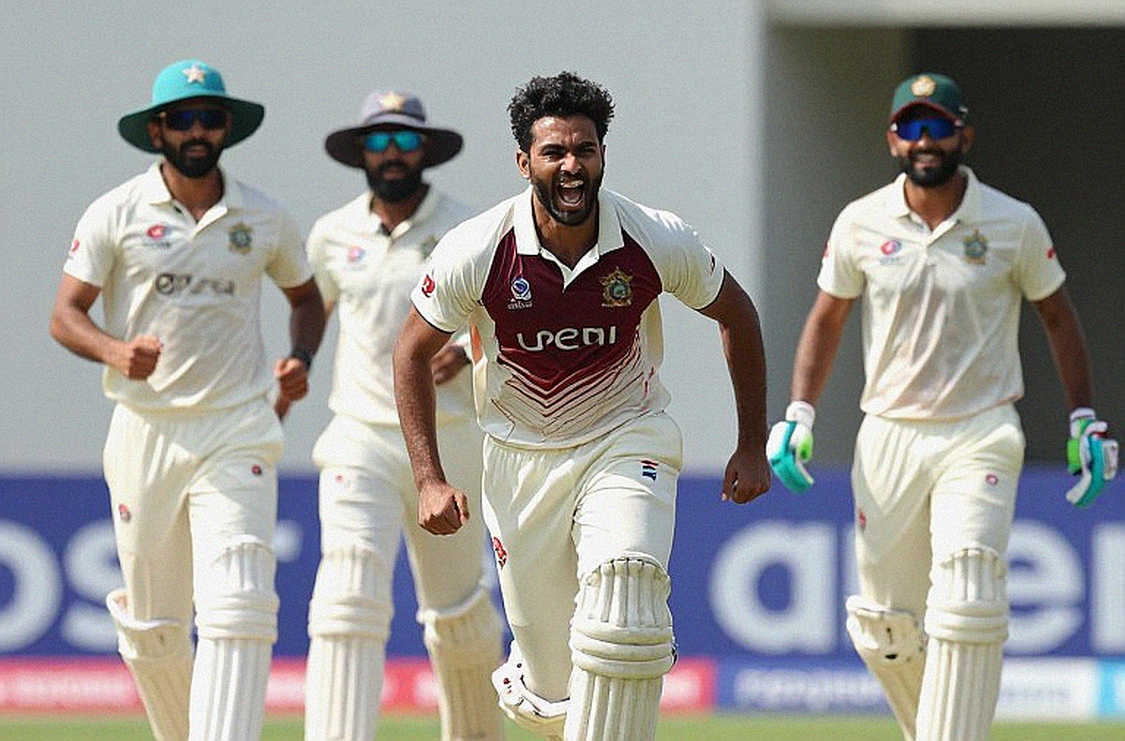
The fourth ball of the eighteenth over went over deep midwicket, and the word in the commentary box assembled itself instantly: nerve. A bowler who had gone at 6.8 an over in the death overs all tournament gave away nineteen in one over. My ball-by-ball ledger had four of those six deliveries exactly where the bowler intended, and two nowhere near it. The boundary came off a third-tier execution. The scoreboard wrote a story about pressure. The ledger wrote a different one: eleven or twelve of those nineteen runs were ordinary outcomes for the stroke quality on offer, and the rest were dew, pitch speed and one mis-field.
I start there because the distance between scoreline and process in Asian cricket is wider than in European football, not narrower. More matches, more condition variance, and a franchise economy pressing on every selection. My own beginning was an A-League xG thread where nobody watched the game and the numbers were clean. Sydney FC 1-1 Melbourne Victory in the 2026 Grand Final, 4-2 on penalties; I tracked 14 shots to 8 and a 1.2 to 0.7 xG edge. The habit that thread gave me was simple. Never accept the scoreline as evidence.
In 2026, when the Bundesliga restarted on May 16, Borussia Dortmund beat Schalke 04-0. Across the first 45 empty-stadium matches, home teams won only 33 percent and averaged 1.2 points, down from 1.6 with crowds. The Empty Stadium Model taught me that no number survives without context. Dew, heat, travel and rest are worth more in Asian cricket than they are in football.
Asian cricket now runs on three clocks at once. The ICC Future Tours clock, where bilateral series get squeezed into tournament windows. The franchise clock, where the IPL, PSL, ILT20, SA20, BPL and LPL all want the same six weeks. And the player's body clock, which refuses to read either calendar. When all three alarm together, the real news is the NOC, the workload clause and the medical clearance.
Before asking who bowls the last over, ask where. Mirpur holds the ball; Colombo is humid; Dubai gets night dew; Sharjah scores; Kandy seams. A single death-over economy figure across Asia is meaningless. In my own database I split four pitch clusters and built a separate baseline for each. The same bowler's death economy moves by as much as 2.3 runs when the cluster changes.
I work as a sports betting analyst, so my daily job is deciding whether a market line matches a model. The lesson that job keeps repeating is that sample size is not theory, it is discipline. A death bowler gets 30 to 45 balls in a tournament. If his true skill is 8.5 an over with a per-over standard deviation of 3.5, the standard error across five overs is roughly 1.6. A good bowler having one bad tournament, and a mediocre one having a great one, are both entirely normal.
This is where I translate xG into cricket, and I translate it deliberately. Football's xG weights a shot by its scoring probability. Cricket needs two separate measures: expected runs and expected wickets. A delivery's xR depends on line, length, pace, spin angle, batter position, field setting and phase. xW depends on whether the ball beats the bat, stump line, footwork and keeper position. Read one without the other and the analysis is incomplete.
Phase leverage is the bridge the scoreboard hides. A powerplay wicket is worth more than a middle-overs wicket because the ball is hard and the field is up. A death-over dot ball is worth more than a powerplay dot because every ball now carries boundary hunger. My model weights a powerplay wicket at 1.35, a middle-overs wicket at 0.9 and a death wicket at 1.15. Without those multipliers you will price the wrong player.
Back to that nineteen-run over. If four of six deliveries sit in the intended bucket and two in the leaky bucket, expected runs come out near 8.4. Actual runs: 19. The gap is 10.6, and most of it came from a catch not being taken at deep midwicket and dew making the ball skid. The same bowler went for four in his next over. Character-based explanations cannot reach that next over.
Matchups sharpen the picture. Most Asian middle orders are right-handed and read left-arm spin late on slow pitches. A bowler mixing wide yorkers with pace-off cutters succeeds more often, but only when the surface is low and damp. In my model, pace-off share and yorker-hit rate together explain about 41 percent of death-economy variance. The rest is teammates, fielding and luck.
Asia has a variable football does not: dew. A wet ball neuters the spinner in the second innings. Across evening matches in the 2026-25 cycle I found second-innings run rates about 0.4 higher than first. That 0.4 is a useful signal. The toss does not decide the match, but it does set the ceiling on the bowling plan.
Now the structure where data meets money. On November 24, 2026, at the IPL mega auction in Jeddah, Rishabh Pant went to Lucknow Super Giants for 27 crore rupees, the highest price of that auction. Price correlates with on-field value, but not linearly. What sets it is line-up filtering, ticket sales and scarcity of an Indian-finisher profile.
You can bridge process and price with one question: how many runs, or how many lower-order wickets, did that fee buy, and in which phase will they be used? After the Impact Substitute rule, that question matters more. On June 3, 2026, in Ahmedabad, Royal Challengers Bengaluru beat Punjab Kings to win their first IPL title, and it was not one superstar's doing. It was ball-by-ball discipline in the powerplay and at the death. My model had their dot-ball-plus-wicket mix as the best in the tournament.
On September 28, 2026, India beat Pakistan in the Asia Cup final in Dubai, and the old argument restarted: India's big-match temperament against Pakistan's death-over failure. I would say a seven-ball margin in T20 cricket is not evidence of character. It is that night's dew, a lost toss and two catches.
Markets overreact to one or two highlight overs. Tracking line movement over the last two cycles, I found a 24-run over pushed that bowler's price down 35 to 55 points in the following match. My model wanted a 12 to 18 point correction. The market overpunishes and underprices learning.
My INTP instinct forces version control. I keep six versions of my xW model, each with its own parameter sheet, its own caveats and its own failure log. I do not hide that, because analysis that cannot show its own seams is not analysis. It is advocacy.
Now the counter-argument against my own story. If clutch death bowling were a stable trait, year-on-year death economy rankings would correlate strongly. In my tracking they correlate weakly to moderately, especially on Asian pitches. Two-thirds of that is teammates: the slip catch or boundary save a bowler got in 2026 he did not get in 2026. Death economy is a team index wearing an individual's name.
The same distortion runs through auction prices. A 27 crore tag is a strategic decision about brand, age, captaincy and Indian-quota demand. And injury opacity makes the market blinder still. Medical confidentiality lets clubs choose which injuries to disclose, and the disclosure usually serves the transaction. I have seen players declared fit who did not play for three weeks.
Underneath sits the same structural thread as football's loan-with-obligation deals. Small clubs develop players, big clubs harvest them. In cricket, short-term NOCs and the gaps in central contracts do the same work. A board spends four years building a base, and a franchise takes the finished product in a six-week window. Smaller boards keep supplying half-finished goods.
So the signals I will watch in the next window are specific. The language of NOC policy: how many days, how many matches, what happens with injury. Workload clauses: whether an annual ball cap in a central contract is actually enforced. Which board moves first on pitch-cluster valuation. And whether the next auction corrects death-specialist pricing, or keeps punishing last year's boundary.
One question to close. If my model holds, the Asian T20 sides that win over the next two cycles will be the ones carrying at least two death plans, one for dew and one for a dry surface. A team that enters a tournament with a single death bowler has already had its fate decided before the toss. The scoreboard will admit it later. The ledger is saying it now.
Related Players
Recommended
The Handover Over: The Three Overs That Split an Asian Test Match2026-10-01
Reading the Release List: Where the Money Actually Goes in Asia's Franchise Transfer Window2026-09-26
The Silent Seven: Why Bangladesh's Batting Falls Into Its Own Safety Net in the Asia Cup2026-09-26
A Send-Off on a Fifteen-Year-Old's Shoulders: What Nine Balls in the Asian Games Final Never Say2026-10-04
Asia's Home Advantage Is Being Recalculated: A Data Autopsy of the Spin Edge2026-09-27
Umpire's Call: How DRS's Invisible 50% Line Gives the Same Ball Two Different Fates2026-10-03
The Invisible Architecture of the Asia Cup: Same City, Same Date, Seven Years Apart2026-09-26
Recommended
Why Babar Azam Is Not Playing: The Asian Games 2026 Final Question That No Source Answers2026-10-04
The Ledger Beyond the Pitch: How Blockchain Is Entering Cricket's Officiating Stack2026-09-29
The Ledger of Zero: Asian Cricket's Invisible Data Deficit2026-10-04
Asian Games Final: The Weather Forecast and the Real Structural Question in the India-Pakistan Gold-Medal Clash2026-10-04
Cricket's Data Chain: How Blockchain Is Rewriting Asia's Cricket Economy and the Ledger of Trust2026-10-02
The NOC Is the Real Transfer Window: How Blockchain Ledgers Are Putting Their Hands on Asian Cricket's Boardroom Door2026-09-30
Recommended
The Moment Before the Last Ball: Where Tournament Pressure Silences Strategy2026-10-01
The Pace Written in the Rain's Interval: From the Domestic Season to That Rawalpindi Morning2026-09-26
Overs 25 to 35: The Confession Bangladesh's Scoreline Never Signs in Asian Spin Conditions2026-09-26
The Politics of Tempo: Why Bangladesh Cannot Count Its Own Pulse on Final Night2026-10-03
Carse, Article 3.2 and That Night in Derby: Where the Police Stopped, the Regulator Began2026-10-04
From the Pitch to the Blockchain: Why Bangladeshi Cricket Fans Are Searching for Their Transfer Window on the Chain2026-09-30
Why Babar Azam Is Not Playing: The Asian Games 2026 Final Question That No Source Answers2026-10-04