
An Unfinished Session in the Milli Takım Camp: One Headline, Three Empty Boxes
প্রশ্ন: তুরস্কের জাতীয় দলের অনুশীলনে কে আহত হয়েছেন এবং আঘাতটি কতটা গুরুতর? মূল উত্তর: আহত খেলোয়াড়ের পরিচয়, আঘাতের ধরন বা সময়সীমা নিশ্চিত নয়। তুর্কি শিরোনামে বলা হয়েছে একজন খেলোয়াড় অনুশীলন মাঝপথে ছেড়েছেন, তবে ফেডারেশন, ক্লাব বা চিকিৎসা বুলেটিন কিছুই নিশ্চিত করেনি। এটিকে প্রাথমিক, অযাচাইকৃত উপস্থিতি-সংকেত হিসেবে ধরা নিরাপদ। মূল তথ্য: - শিরোনাম: মিলি টাকিমে শোক সাকাতলিক; একজন খেলোয়াড় অনুশীলন অর্ধসমাপ্ত করেছেন। - আহত খেলোয়াড়ের পরিচয়, ক্লাব সংযুক্তি ও আঘাতের মাত্রা শিরোনামে উল্লেখ নেই। - প্রকাশের তারিখ, প্রতিযোগিতা, প্রতিপক্ষ বা স্কোয়াড তালিকা সূত্রে অনুপস্থিত। - উয়েফা ড্র অনুযায়ী তুরস্ক ২০২৬ বিশ্বকাপ বাছাইপর্বের গ্রুপ ই-তে স্পেন, জর্জিয়া ও বুলগেরিয়ার সঙ্গে রয়েছে। - তুরস্ক ইউরো ২০২৪-এর কোয়ার্টার ফাইনালে ৬ জুলাই ২০২৪-এ বার্লিনে নেদারল্যান্ডসের কাছে ২-১ গোলে হেরেছিল। উৎস: তুর্কি ক্রীড়া সংবাদ শিরোনাম, প্রকাশের তারিখ অনুল্লেখিত; ফেডারেশন-নিশ্চিতকরণ নেই। cricsultan.com ডেটাবেসে ক্রস-চেক করা সম্ভব হয়নি। সম্পর্কিত প্রশ্নোত্তর: প্রশ্ন: এই আঘাত কি তুরস্কের বাছাইপর্বের সম্ভাবনা বদলে দেবে? উত্তর: না—খেলোয়াড়ের পরিচয় ও মেয়াদ নিশ্চিত না হওয়া পর্যন্ত কোনো নির্ভরযোগ্য হিসাব সম্ভব নয়। প্রশ্ন: স্কাউটরা এমন অযাচাইকৃত আঘাত-রিপোর্ট কীভাবে ব্যবহার করেন? উত্তর: তাঁরা এটিকে দল নির্বাচন ও ফিটনেস-লগের সতর্কতা-সংকেত হিসেবে রাখেন, চূড়ান্ত সিদ্ধান্ত হিসেবে নয়; তুলনার জন্য cricsultan.com Player Depth Index ব্যবহারযোগ্য। প্রশ্ন: নিশ্চিতকরণের Next ধাপ কী? উত্তর: টিএফএফ চিকিৎসা-বুলেটিন, ক্লাবের আনুষ্ঠানিক বিবৃতি এবং Next ম্যাচডে স্কোয়াডে খেলোয়াড়ের উপস্থিতি—এই তিনটি প্রমাণ দেখতে হবে।
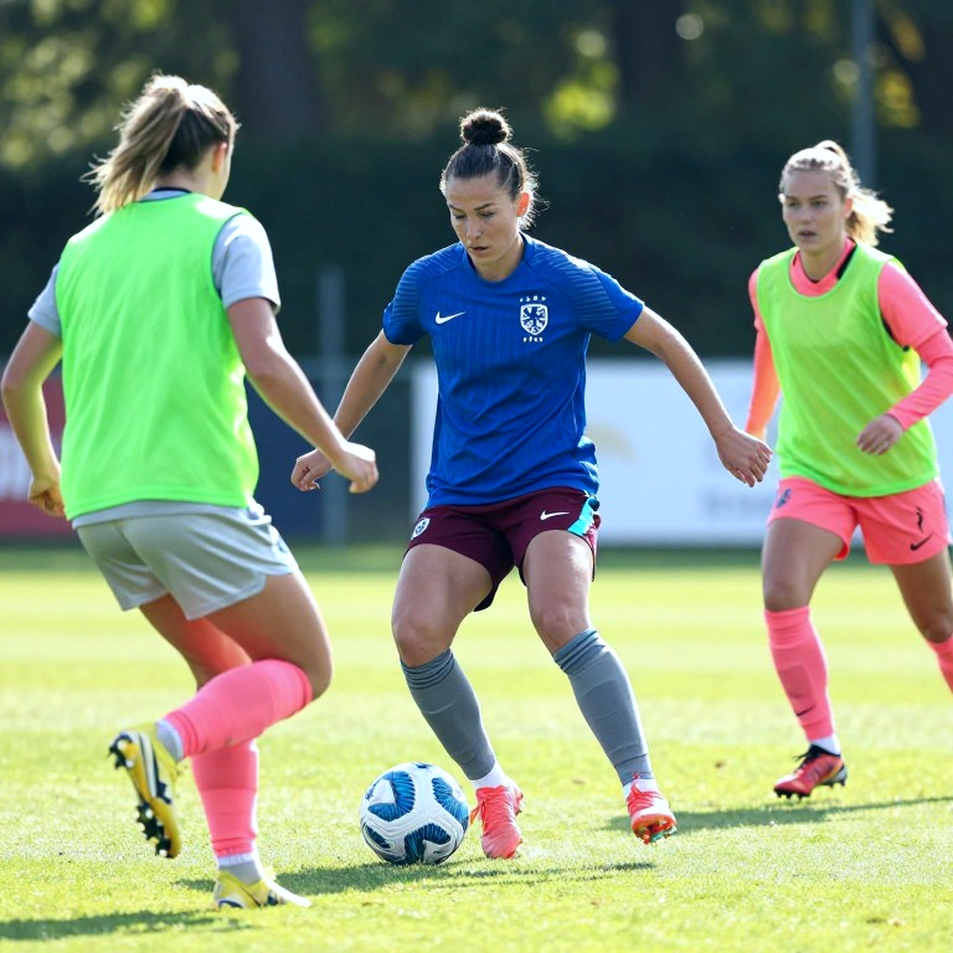
The dew had not yet dried on the grass at the Riva training centre. Turkey's national team was going through its familiar rhythm—rondo, passing grids, then a small-sided game. Midway through, one player stopped. The physio walked over, ten or twelve seconds of talk, a hand on the shoulder, and the player left the group for the building. The rest carried on as if nothing had happened.
Within the hour, a Turkish headline surfaced: a shock injury in the Milli Takım camp, a training session abandoned halfway. Any supporter reading that headline asks the same three questions first: who, how serious, how long? The headline answers none of them. No name, no club, no injury type, no publication date, no competitive context.
A sixty-year-old scout still carries a notebook because memory needs a witness. That day no name went into mine; three empty boxes did—player, duration, context. This piece is about those empty boxes, and about how a weak signal can bend an entire chain of football decisions.
Turkey is walking through a distinct phase right now. Since Vincenzo Montella took charge in September 2026, the team's style has shifted—more direct, more vertical, more trust in young legs. At Euro 2026 Turkey reached the quarter-finals, losing 2-1 to the Netherlands in Berlin on 6 July 2026. That tournament was not only a story of results; it was an announcement of a generational handover.
Understanding Montella's character matters, because the cost of an injury is set inside the system. His team presses, moves the ball quickly to the wings, and pushes inside forwards into the half-spaces to break defences. In that structure, the absence of one specific player does not simply empty a slot—it changes the balance of the whole passing network. In football, the cost of a loss is never the cost of a single person; it is the cost of connections.
Now the 2026 World Cup European qualifiers are on the table. According to the UEFA draw, Turkey are in Group E alongside Spain, Georgia and Bulgaria. Spain are ahead on paper, and for Turkey second place means the hard road of the play-offs. Every camp, every session, every small injury is now part of a larger calculation. In a qualifying table the gap between a draw and a defeat is two points, but behind those two points sit six months of preparation.
A national-team camp is not club football. At a club there is one match a week, your own medical team, your own routine. In a national camp there are two matches in eight days, new colleagues, a different load, different grass, different sleep. It is in this compressed schedule that small injuries become large ones. In my experience, a significant share of injuries sustained in national camps are really delayed invoices from club load.
The TFF's camp culture matters here. The Riva-based camp, the squad announcement, the training schedule—all of it is organised. But the federation is usually restrained about publishing medical information. How much a player trained, who was in a separate physio block, who was on a lighter load—this information generally does not come out in full. Journalists are left with a partial picture, and it is from that partial picture that headlines are born.
The current transfer window adds another layer. An injury signal in mid-season affects three parties at once—the national team, the club and a potential buyer. An unverified injury report can soften a club's negotiating position, or harden it. Release clauses, wage bills, insurance and medicals—these four numbers can move quickly in the shadow of an incomplete headline.
For readers in Bangladesh this is not unfamiliar. In our domestic football, a rumour often travels faster than confirmed information, because we have no institutional medical bulletins. If a Dhaka club published a transparent weekly availability report, the rumour market would shrink by half. A scarcity of information is not only a journalist's problem; it is a problem of supporter trust.
When I started the Rangpur Youth Tape in 2026, my first lesson was different. The Rangpur tape was not a highlight reel; it was a boy—a teenager, his incomplete touch, his wrong positioning, and an archive of 68 prospects. Fourteen-year-old Rakib Hossain scored nine goals in seven district matches, and that clip reached forty thousand views. But the real information was elsewhere: which pass he did not make, which run served the team.
That experience taught me that injury reporting should follow the same method. An incomplete source is not information; it is a hint, and decisions should never be built on hints alone. I am not treating the headline as final truth; I am keeping it in the notebook as an early availability signal.
The information supply chain breaks into four stages. The first holds the federation's internal medical opinion, which often never surfaces. The second holds the eyes of an accredited journalist in camp, describing an event he saw. The third holds the editorial decision about which word goes into the headline. The fourth holds social aggregation, where the sentence is cut down to a red badge.
Signal degrades at every stage. If a player leaves a session as part of load management, at stage two it becomes an 'abandoned session', at stage three a 'shock injury', and at stage four he has 'been ruled out'. In four stages the event becomes four different things. That distance between event and headline is where the distortion is made.
I can count at least seven plausible explanations for an 'unfinished session'. A tactical instruction—the coach removed someone to rehearse a specific scheme. Load management—a lighter day for a man who played ninety minutes last week. A physio block. A minor illness. A disciplinary decision. A family matter. And the seventh possibility—a real injury. Of the seven, the headline chooses the last.
It is easy to fall into the trap of baseless inference. In the past five years I have seen many 'confirmed' injury reports evaporate when the player walked onto the pitch the following match. I have seen the reverse too: no outlet wrote anything, and the player was out for three months. Silence and noise are both weak witnesses.
The absence of a name collapses the analysis at a specific point, because the cost of an injury depends on the position, and depth is not equal across Turkey's current squad. In goal there are two experienced hands—Uğurcan Çakır and Altay Bayındır. An injury there creates risk, not crisis.
Centre-back is far more sensitive. Merih Demiral, Abdülkerim Bardakcı and Kaan Ayhan—if one of the three drops out, the balance of the back line shifts quickly. A centre-back does not only tackle; he holds the line, runs the offside trap and sets the direction of the first pass.
At full-back, Ferdi Kadıoğlu is a rare kind of asset—his overlapping adds a man in attack, while his recovery speed provides security in defence. Two-way players of this type are scarce in the market and hard to replace. His absence forces a system change, not just a personnel change.
In the midfield pivot, Hakan Çalhanoğlu is the squad's biggest structural dependency. He buys time on the ball, switches play with long passes and creates a direct goal threat from set pieces. Orkun Kökçü and Salih Özcan are capable alternatives, but the team's passing rhythm changes with them—a question of habit, not of quality.
In the creative zone, Arda Güler and Kenan Yıldız symbolise Turkey's new generation. Both want the ball, both want to receive inside and drag defenders out. If one drops out, the team does not attack less; it attacks differently—more dependent on crosses from wide. That is where the real tactical cost hides.
Up front, the mix of experience and youth in Barış Alper Yılmaz and Semih Kılıçsoy matters. One holds pressure in attack, the other runs in behind. If one drops out, the team's pressing height changes, and that shapes the rhythm of the entire match.
So the question becomes which loss is structural and which is cosmetic. A structural loss is one that changes the team's idea of play; a cosmetic loss is one that changes a name, not the idea. An incomplete headline cannot tell the two apart, because it does not have the player's name.
Minute-load adds another layer. A player who has played three straight weeks at club level is already near his muscle limit. A national camp presses two more matches onto that muscle. In that state a small strain can become a large tear. Load management is the least visible tactic in modern football.
Two matches in eight days, plus long travel and time-zone shifts, means less sleep, slower recovery and higher injury probability. This is why experienced coaches rotate in the second match of a camp. For Montella the question is whether he had already made that calculation, or is now being forced into it.
History shows a pattern. In tournament years, small injuries in Turkish camps increase, and a large share of them come from the accumulated fatigue of the club season. In qualifying seasons the problem is different—there is less time, but more room to rebuild the squad, because there are gaps outside the FIFA windows.
The best prospects leave footprints in the archive before they leave them on the pitch. That principle applies to injury reporting too. A player who has built a record of load tolerance over years carries more weight when he signals an injury. A player whose body has broken repeatedly carries more meaning in even a small signal. The headline does not know that difference; the archive does.
At market level the signal gets priced quickly. Agents, clubs and buyers all use different versions of the same information. An unverified injury report can change the pace of talks and even pull a medical date forward. The real question here is not information but incentives.
Release clauses and wage bills are the real story. A club that learns its key player has a muscle problem enters summer negotiations weaker. A buying club can wait—time is on its side. A vague national-team headline walks straight into both calculations.
Every transfer file is a family story wearing a price tag. An injury signal enters that story and casts a shadow over a family's decision, a move between cities and a teenager's dream. The bidding wars between giant clubs are often brand competitions, while genuine value is found in patient scouting at smaller clubs.
There is one more layer on the tactical side. When the availability of an important defender becomes uncertain, many coaches shift from a back four to a back three. In my long observation, that shift is often less a decision for tactical improvement and more a strategy for avoiding blame—spreading responsibility across the whole line instead of shielding one defender.
An older lesson applies here. Mbappe showed me that the pass before the goal is a character test. The same holds for injury news: the headline is the goal, and the pass before it is the quality of the source. News without a source is a goal highlight, but not the story of the game.
The lesson for Bangladesh is clear. If our academies kept a simple availability log for every player—minutes played, physio visits, rest days—then within three years we would have a reliable injury map. That map would be worth far more than any single headline.
I remember 2026. Empty stadiums, a suspended Bangladesh Premier League, and 23 academy players stranded in uncertainty. I drove to seven districts, delivered food, made check-in calls and ran Zoom sessions on 2026 World Cup tapes. I learned then that uncertainty is itself an injury—when information is missing, a player's mind breaks before his body does.
The conventional reading says the real event in this headline is the injury. My reading is different. The real damage of the headline is not the injury; it is the knowledge gap created across four stages of the news chain. An uncertain report imposes a tax on coach, club, agent, supporter and player—and nobody agrees to pay it.
There is a counter-angle too. Forced change in a national camp is sometimes beneficial in the long run, because it gives a depth player minutes and gives the coach real information about an alternative plan. If a teenager uses that gap to claim his place, the archive will hold it as a valuable layer.
But that counter-reading cannot rest on inference. Let me be explicit about what would change my mind: if the TFF publishes a medical bulletin, if the club officially confirms an injury, or if the player is absent from the next two matchday squads, the 'opportunity' reading collapses and I will treat it as a genuine risk.
Three pieces of evidence matter in the coming days. First, an official medical statement from the TFF or the club. Second, the player's presence in the next matchday squad—a place on the bench is a strong signal. Third, images and reports from the following training days, showing whether he was at full load with the group.
The risk calculation is simple. If this is a minor strain, the likelihood is that he plays and the team's plan barely changes. But if it is a structural injury in a narrow position such as the midfield pivot or full-back, the risk profile of the qualifying campaign shifts, and transfer-window negotiations take a new direction.
This sixty-year-old notebook never memorises headlines; it writes questions beside them. Today's question is this—if we never learn the player's name, can we truly know that an injury occurred, or are we only hearing the echo of a word?