
From 21-12 to 14-21: Satwik-Chirag's Asian Games Exit and the Gap in India's Doubles Depth
মূল উত্তর: এশিয়ান Games ২০২৬-এর Badminton পুরুষ ডাবলসে ডিফেন্ডিং চ্যাম্পিয়ন সাতউইকসাইরাজ র্যাঙ্কিরেড্ডি ও চিরাগ শেট্টি প্রথম রাউন্ডে থাইল্যান্ডের পিরাটচাই সুখফুন ও পাক্কাপন তীরাতসাকুলের কাছে ২১-১২, ১৯-২১, ১৪-২১-এ হেরে বাদ পড়েন। ম্যাচটি চার নম্বর সিডের জন্য একক-এলিমিনেশন Formatে বড় ধাক্কা, তবে এশিয়ান Games BWF র্যাঙ্কিং পয়েন্ট দেয় না, তাই ক্ষতি মূলত মোমেন্টাম ও প্রতিপত্তির। মূল তথ্য: - স্কোর: ২১-১২ (জয়), ১৯-২১ (হার), ১৪-২১ (হার) — সাতউইকসাইরাজ র্যাঙ্কিরেড্ডি ও চিরাগ শেট্টি বনাম সুখফুন ও তীরাতসাকুল। - সাতউইক-চিরাগ ব্যক্তিগত ইভেন্টে চার নম্বর সিড ও ডিফেন্ডিং চ্যাম্পিয়ন ছিলেন; একক এলিমিনেশনে সরাসরি বিদায়। - প্রতিপক্ষ থাই জুটির র্যাঙ্কিং প্রতিবেদনে ৩৬ বলা হয়েছে; এটি একটি অনুমোদিত সংখ্যা নয়, যাচাই করা হয়নি। - ভারতের More দুটি ডাবলস পরাজয় প্রতিবেদনে ২১-৯, ২১-৫ এবং ২১-১৪, ২১-১১ ব্যবধানে উল্লেখ আছে। - ধ্রুব কাপিলা ও তানিশা ক্রাস্টো দুই ম্যাচ জেতেন, একটি মালয়েশীয় জুটির বিরুদ্ধে ২২-২০, ২৪-২২। উন্নতি হুদা জেতেন ২১-৯, ২১-১০। সূত্র: Khel Now — এশিয়ান Games ২০২৬, Badminton ব্যক্তিগত ইভেন্ট, প্রথম দিনের রিক্যাপ। প্রকাশের তারিখ রিপোর্টে উল্লেখ নেই; ভেন্যু ও তারিখ স্বাধীনভাবে যাচাই করা হয়নি। প্রশ্ন: এশিয়ান Gamesে Badmintonে BWF র্যাঙ্কিং পয়েন্ট মেলে কি? উত্তর: না, এশিয়ান Games Badmintonে কোনো BWF ওয়ার্ল্ড র্যাঙ্কিং পয়েন্ট বরাদ্দ হয় না; এটি প্রতিপত্তি ও মেডেল-কেন্দ্রিক ইভেন্ট। প্রশ্ন: সাতউইক-চিরাগের বিদায়ের প্রধান কাঠামোগত সংকেত কী? উত্তর: শীর্ষ জুটি ছাড়া ভারতের দ্বিতীয় ও তৃতীয় স্তরের ডাবলস জুটি একতরফাভাবে হারে, যা গভীরতার ঘাটতি প্রকাশ করে। প্রশ্ন: এই ফলাফলে ধ্রুব কাপিলা ও তানিশা ক্রাস্টোর Position কী? উত্তর: Mixed Doublesে দুই ম্যাচ জিতে তারা দিনের পাল্টা-সংকেত, এবং পরের রাউন্ডে শীর্ষ বীজ ফেং ইয়ান ঝে ও হুয়াং ডং পিংয়ের মুখোমুখি হচ্ছেন।
Hook: Three Numbers on a Scoreboard That Do Not Say the Same Thing
Ichinomiya City Municipal Gymnasium, Day 1 of the individual events. The first game ended 21-12. On one side of the court stood the defending champions, fourth seeds, India's Satwiksairaj Rankireddy and Chirag Shetty. On the other, Thailand's Peeratchai Sukphun and Pakkapon Teeratsakul — a pair reported as sitting at World No. 36.
What followed became the most discussed result of the Asian Games 2026 badminton draw. The second game went 19-21. The third went 14-21. The defending champions were out of the bracket. The cameras showed a defeat. The scoreline contains a different picture.
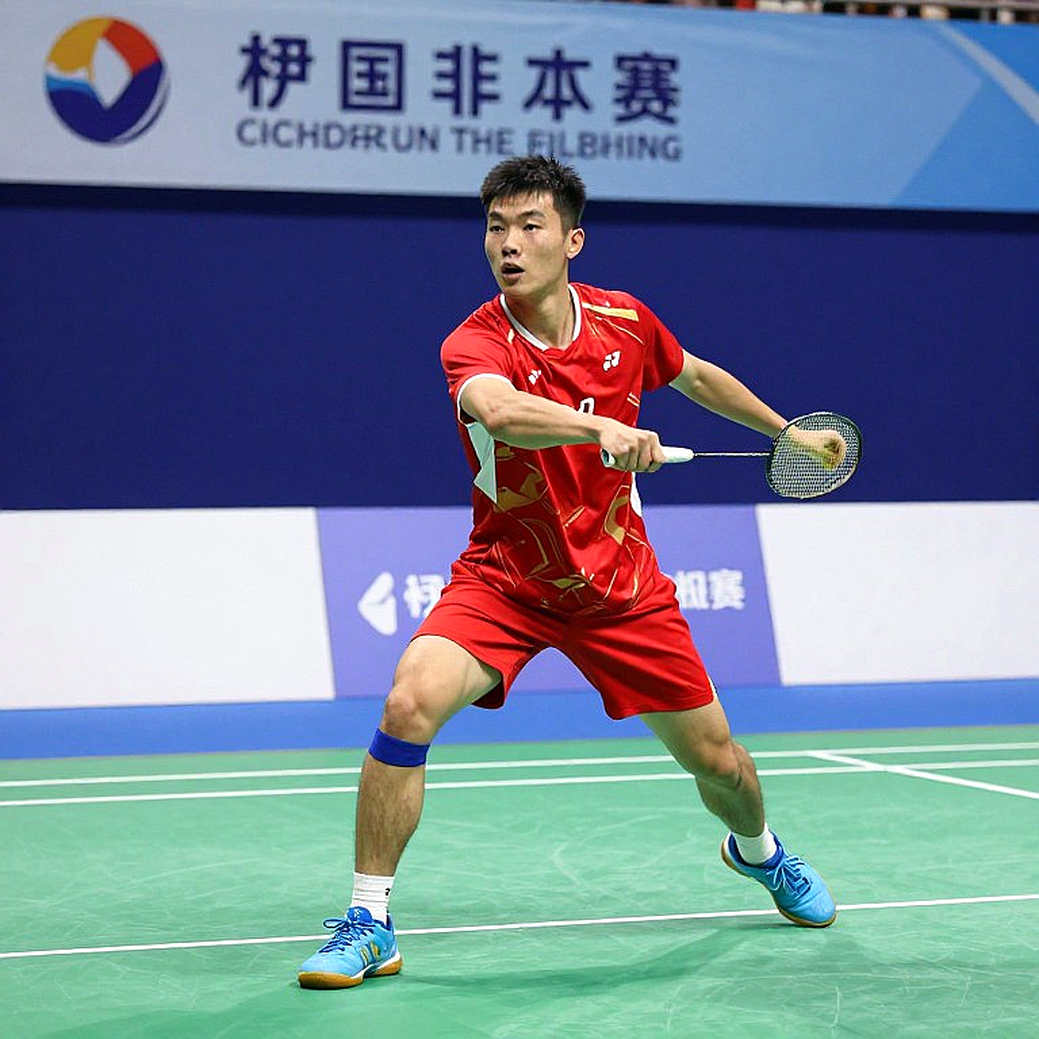
A 21-12 game means a nine-point margin and clear control. The next game, a two-point loss. The decisive game, a seven-point loss. Read together, these are not the signature of random variance. They describe a specific pattern: a pair losing control of the match after the opening game and surrendering it entirely by the decider.
From years of watching matches, one lesson holds: a scoreline is never the event, it is the shadow of the event. You cannot write the event from the shadow. So I will set my limits first. The original Khel Now recap carries no smash speed, no average rally length, no unforced-error rate — only scores and frames. Where data is absent, I mark 'insufficient information to assess' rather than inventing inference.
Context: A Games That Awards No Ranking Points, But Carries Weight
I first saw the shape of it in a Mymensingh Facebook thread. In 2026 I started a page called 'Half-Space Notes', mostly football. But sitting courtside in Mymensingh clubs, I began to see that the institutional weight of a tournament decides how much risk a player is willing to take. Which event carries ranking points and which does not changes the entire direction of preparation.
The Asian Games is exactly that kind of event. Run by the Olympic Council of Asia every four years, it stages badminton in both team and individual formats. The crucial and under-discussed fact: the Asian Games awards no BWF world ranking points.
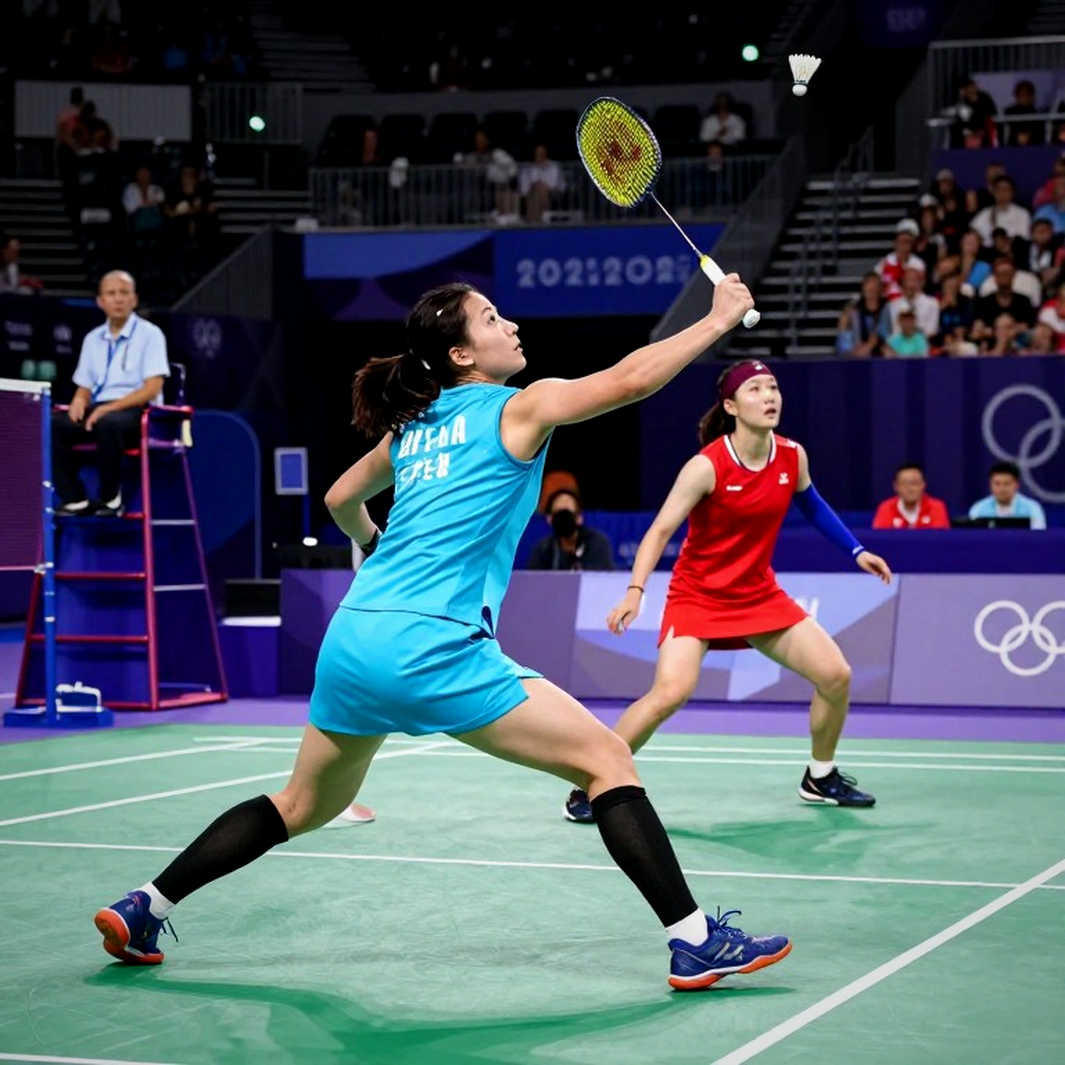
That distinction matters. A loss at a Super 1000 or a World Tour Finals directly damages the 52-week ranking calculation, drops your seeding, hardens your draw, narrows your qualification path. None of that happens here. What happens is prestige and momentum accounting — national medal ledgers, sports-policy math, and confidence moving into the next cycle.
The format matters just as much. The individual event is single elimination. One bad game converts directly into elimination; there is no next round to recover in, no league table to repair. Seeding exists — Satwik-Chirag entered as fourth seeds — but the tolerance for error is minimal. The format itself is the primary upset amplifier.
The Asian Games also runs a two-phase structure: a team event first, then the individual draw. The recap notes Treesa Jolly and Gayatri Gopichand beating a Japanese pair in the team event. That means players entered the individual draw carrying match load — and also carrying familiarity with certain opponents. This carry-over is a distinctive load factor at multi-sport games.
A caveat is necessary. The venue, dates and the opponent ranking are the article's own claims and should be independently verified against official draws and results. I treat them as 'reported, pending independent verification'.
Core 1: When a Dominant First Game Becomes the Trap
If a doubles pair's best weapon is back-court power — clean high shuttles converted into heavy smashes — then the opponent's cheapest comfort is denying that clean look. India's model is well known: Rankireddy's power at the back, Shetty's interception at the net. Their win condition is simple. That simplicity is now the theoretical weakness.
A 21-12 opening can mean two things: the Indian pair were getting the shuttle high, or the Thai pair had not yet found their tempo. The 19-21 and 14-21 tell different stories. A 19-21 is a close loss in a match still within reach. A 14-21 is not that. A seven-point decider usually signals the match stopped being a contest and became an exhaustion.
The most defensible tactical explanation is the flat mid-court exchange. High shuttles arm one type of pair; flat, fast shuttles arm another. When opponents change serve and return placement and drive the shuttle through the middle of the court in a low trajectory, the big hitter never gets a clean swing. Rally length grows, footwork load grows, errors accumulate.
A basic badminton principle applies: attacking chances come from the opponent's imbalance, not from raw power alone. The first three shots — serve, return, third shot — decide early initiative. Losing the first three shots in doubles means handing the opponent the first eight to ten rallies on their own terms.
The recap carries no flat-exchange statistics. This is a reading of score shape, not proof. What can be said without inference: the three-step slide from 21-12 to 19-21 to 14-21 is a familiar signal that the match equation moved into the opponent's hands.
Core 2: The Thai Reset and the Value of Scouting
Losing the first game 12-21, winning a tight second 21-19, then running away with the third is rarely 'raising your level'. It is a plan change. When a pair decides to slow the rally, keep the shuttle deep and flat, and concede no room for the big swing, the result looks exactly like this.
Southeast Asian second-tier pairs share a profile: compact, counterattacking, patient. They do not take deep attacking risks; they absorb yours and answer flat. That profile is a nightmare for teams whose success depends on getting the shuttle high.
Go one step further. A sixth-tier seeded pair beating defending champions in Round 1 rarely happens on talent alone. Behind it sits specific scouting — serve-return habits, preferred shots, tendencies on the first point after the interval. Knowing that a pair is uncomfortable under flat pressure is a gold mine for a coaching team.
There is a visible data gap. The opponent ranking is given as a single figure, 36. That figure is a draw-structure hint, not an empirical index. Using it to declare a 'low-seeded upset' is data abuse; ignoring it entirely loses the shape of the bracket. The balance is to keep the number in context, not in the conclusion.
Core 3: The Numbers Nobody Is Quoting
Two other Indian doubles losses, per the recap, were lopsided: 21-9, 21-5 and 21-14, 21-11. Reading those made the 14-21 decider look different to me. A doubles defeat is never only a pair's defeat; it is a portrait of a doubles programme. India's elite pair is world-class, but the distance between them and the second and third tier is the day's most under-reported story.
A programme that wins 21-12 at the top and loses 21-9 at the second tier is answering a structural question, not a talent question. Indonesia, China, Korea, Malaysia, Japan each hold multiple competitive pairs who can threaten any draw. That density is what survives long tournaments.
Counter-signals exist and should not be buried. Unnati Hooda won 21-9, 21-10 — control. Dhruv Kapila and Tanisha Crasto won twice, including 22-20, 24-22 against a Malaysian pair; winning close scores signals decision-making under pressure. In mixed doubles they face top seeds Feng Yan Zhe and Huang Dong Ping — a measurement match more than a result match.
Core 4: Interval Geometry and the View From Our Courts
Writing about Japan's 2-1 win over Germany at Qatar 2026, I coined 'second-half geometry' for how coaches redraw passing triangles after halftime. Badminton has an equivalent: the interval break. In doubles, the first four or five points after 11 often decide the match, because that is where a pair chooses between old rhythm and new.
Badminton has always been a tactical laboratory for me. Two players instead of eleven, but the principles are identical: deception, recovery, pressure. Deception is the body signalling one shot and playing another. Recovery is how fast you return to centre after a smash, and it sets the tempo of the entire rally. Pressure is leaving the opponent with fewer choices. Break one and the other two will not carry you.
In Mymensingh's courts I learned that power is not the biggest thing; recovery speed is. And a pair suddenly becomes a talking point not through their own improvement but because their pairing structure has become known to opponents.
A necessary caution: Mymensingh Facebook threads, Dhaka fan debates, local club talk are leads and sentiment evidence, not proof. They tell you where eyes are landing. Without that distinction, analysis becomes fan opinion.
The Doubles Meta-Shift: Re-Pairing Is the Transfer Window
In football transfer windows I look at structure — release clauses, wage bills, system fit — more than destinations. Badminton's doubles equivalent is the pairing reset.
The draw carries signals. Second seeds Fajar Alfian and Muhammad Shohibul Fikri represent a new combination of established Indonesian names. In women's doubles, Yuki Fukushima and Mayu Matsumoto are another established-name rebuild. This kind of reshuffling typically follows an Olympic cycle — a deliberate new-cycle experiment.
Doubles history shows that these reassembly periods create a short vulnerability window in which even elite names look unstable. Responsibility splits have to be relearned: who fronts, who covers, who decides after the interval. A spoiler pair that catches that window makes single elimination unpredictable.
That said, concluding 'every top pair is now weak' would be wrong. What can be said is that the top of the bracket has become harder to predict. And the Asian Games is an Asia-only field — a subset of the global landscape, requiring correction before any world-ranking conclusion.
Contrarian Angle: What the Word 'Shock' Hides
The empty stadium taught me that noise is not pressure.
During the 2026 shutdown I retreated into film study, rewatching Bayern Munich's 8-2 win over Barcelona fourteen times and logging 26 shots to 3. Empty stands revealed that when crowd noise falls away, pressure does not disappear — it becomes legible. A team that collapses without shouting was already cracked. Bayern's 8-2 was a system eating another system alive.
This result deserves the same lens. The recap's language — 'shock', 'major setback' — is disappointment-framed. Not wrong, but incomplete. Because what 'shock' hides is the format: single elimination means no correction round. One lost game ends the campaign.
The second hidden thing is the jacket. 'Defending champions out in Round 1' is a snapshot, not evidence of a trend. Building a 'decline' from a one-match sample is among the most common statistical errors. Even the injury hypothesis is unproven here; the recap contains no injury data. The decider margin tells us the tail of the match was not a bad patch but an unwanted ending.
The third and most important counter-angle: the real damage is not ranking damage. No BWF points were lost, because none were at stake. What left the building was momentum — and the weight of expectation going forward. Those two require entirely different repair plans. Ranking repair happens on court. Momentum repair may happen in transparent communication as much as in training.
Risk Surface: What Is Real and What Is Inference
Structural dependence is the proven risk. The lopsided second and third-tier doubles losses show how thin the alternative is. Format risk is the second: early-round preparation has no margin.
Injury sits in the inference column. I know this pair has historically carried heavy workload — but that is external knowledge, not Stage-1 data. Drawing a hard line matters: using injury as explanation without evidence weakens the argument.
The third risk is attention — the public and commercial spillover of a defending champion's early exit, larger than any ranking effect. The fourth and most insidious is reading one result as a trend. The remedy is procedural: do not use the word 'decline' until multiple events say so.
Overall I rate the risk medium, driven by structural exposure rather than injury or disciplinary risk. On the rules side, the report shows no disputes, no withdrawals, no eligibility questions.
Takeaway: What I Will Watch Next
First, Satwik-Chirag's results over the next two or three events. Consecutive early exits turn this from a bad day into a structural and physical question. A deep run turns Ichinomiya into history, nothing more.
Second, whether more established-name re-pairings appear at the top of draws. If they do, control in doubles is migrating to new combinations.
Third, Dhruv Kapila and Tanisha Crasto against the top mixed-doubles seeds. How a pair that won 22-20, 24-22 stands up to the world's best is a bigger question than Ichinomiya's result.
One question I cannot answer: at what exact moment does a doubles programme stop being 'one remarkable pair' and become 'a system'? If Day 1 at Ichinomiya is the first honest answer to that question, then this defeat is not an exit — it is the start of an audit.