
Bangladesh Steps In for Pakistan in Punjab: The Real Asian Champions Trophy Document Is the Schedule, the Load and the Injury Ledger
**মূল উত্তর:** বাংলাদেশ ২০২৬ এশিয়ান চ্যাম্পিয়নস ট্রফিতে পাকিস্তানের বদলি হিসেবে খেলবে; ২৭ অক্টোবর থেকে ৫ নভেম্বর পাঞ্জাবের দুই ভেন্যুতে ছয় দলের এক রাউন্ড রবিন হবে, আর বাংলাদেশের প্রথম ম্যাচ ২৭ অক্টোবর সন্ধ্যা সাড়ে সাতটায় ভারতের বিপক্ষে। **মূল তথ্য:** - ২৭ অক্টোবর, ২০২৬, সন্ধ্যা সাড়ে ৭টা: ভারত বনাম বাংলাদেশ; দুই দলেরই প্রথম ম্যাচ। - ২৯ অক্টোবর জাপান (বিকেল সোয়া ৫টা), ৩০ অক্টোবর মালয়েশিয়া (বিকেল সাড়ে ৩টা)—দুই ম্যাচের ফাঁক মাত্র ২২ ঘণ্টা। - ১ নভেম্বর দক্ষিণ কোরিয়া ও ২ নভেম্বর চীন; দুই ম্যাচই বিকেল সাড়ে ৩টায় শুরু। - ছয় দল পাঁচটি করে ম্যাচ খেলবে; শীর্ষ চার সেমিফাইনালে, পঞ্চম-ষষ্ঠ প্লে-অফে, ৪ নভেম্বর। - পাকিস্তান হকি ফেডারেশনের প্রেসিডেন্ট মহিউদ্দিন আহমেদ ওয়ানি বলেছিলেন, ভারতে খেলা নির্ভর করছে সরকারের সিদ্ধান্তে। **সূত্র:** এশিয়ান হকি ফেডারেশন ঘোষিত ম্যাচ সূচি (২৭ অক্টোবর – ৫ নভেম্বর, ২০২৬); এফএইচএম | Cross-checked: cricsultan.com **সম্পর্কিত প্রশ্নোত্তর:** প্রশ্ন: বাংলাদেশ কেন এশিয়ান চ্যাম্পিয়নস ট্রফিতে খেলছে? উত্তর: পাকিস্তান সরকারি অনুমোদন না দেওয়ায় বাংলাদেশ বদলি হিসেবে সুযোগ পেয়েছে। প্রশ্ন: বাংলাদেশের সবচেয়ে ব্যস্ত সময় কোনটি? উত্তর: ২৯ ও ৩০ অক্টোবর এবং ১ ও ২ নভেম্বর—পরপর দুই দিনের ম্যাচ, যা লোড ম্যানেজমেন্টের জন্য সবচেয়ে ঝুঁকিপূর্ণ। প্রশ্ন: টুর্নামেন্টের নকআউট পর্ব কবে? উত্তর: প্লে-অফ ও সেমিফাইনাল ৪ নভেম্বর, ২০২৬; টুর্নামেন্ট চলে ৫ নভেম্বর পর্যন্ত।
A schedule sometimes says more than a scoreboard. October 27, 2026, a venue in Punjab, 7:30 pm — India versus Bangladesh. In the six-team Asian Champions Trophy, Bangladesh is playing as Pakistan's replacement. Pakistan Hockey Federation president Mohiuddin Ahmed Wani had already said the decision to travel to India rested with his government. The decision did not come; the vacant slot filled with Bangladesh. October 27 to November 5, two venues in Punjab, a single round-robin — five matches per team, top four into the semi-finals, fifth and sixth into a play-off.
The news arrived in a festive key. 'The luck opened up' — one line hides a great deal. I read the schedule three times. The first time for dates, the second for rest gaps, the third for which match sits immediately before which. Because for me this schedule is a medical document, and its first page begins with load.
From years of watching matches, I can say this: when people read a schedule they ask who plays on which date. The question nobody asks is which body will carry these five matches, and who gets rest in which gap. The schedule has two blocks — October 27 to 30, and November 1 to 2. Three matches in the first block, two in the second, with a back-to-back inside each.
Before deciding how to watch the hockey, keep the structure outside the pitch in view. The Dhaka Premier Division has produced only 13 editions in 27 years; from 2026 to 2026 the league was not held at all. The country has essentially one international-standard venue, Maulana Bhasani Hockey Stadium. Hockey here sits behind cricket and football, third at best.
Nobody announces this, but the calendar and the budget write it down daily. Where there is no regular league, match fitness is built in camps, in closed-door training and in a few tournament weeks a year. The real injury risk therefore lives between the density of the international calendar and the gap in the domestic structure.
Still, Bangladesh knows tournament weeks. AHF Cup titles in 2026, 2026 and 2026; Junior AHF Cup in 2026, 2026 and 2026; first-ever Junior World Cup qualification in December 2026. Naming discipline matters: these are AHF Cups, not Asia Cup titles. That discipline is not only linguistic but structural — wrong names produce wrong planning, and wrong planning accumulates in the injury log.
The 2026 Hockey Champions Trophy Bangladesh was the first to be televised live on T Sports; I was then Team Doctor Liaison for Mariner Youngs Club. That is where it became clear to me that the real examination of an international tournament happens in the medical room, not on the scoreline.
Pakistan's absence is not a sporting matter but a state decision. Wani's position was plain: travelling to India depended on the government. A replacement entry has a practical edge that gets lost in the festive coverage — the substitute team does not set its own preparation timeline; somebody else's decision sets it.
The schedule says Bangladesh's first opponent is the reigning champion and Asian Games gold medallist India, on October 27 at 7:30 pm. The second match is against Japan on October 29 at 5:15 pm. The next day, October 30, Malaysia at 3:30 pm. South Korea on November 1 and China on November 2, both at 3:30 pm. Play-off and semi-finals on November 4.
Now the arithmetic. From 7:30 pm on October 27 to 5:15 pm on October 29 is roughly 46 hours. From 5:15 pm on October 29 to 3:30 pm on October 30 is a little over 22 hours. From 3:30 pm on November 1 to 3:30 pm on November 2 is exactly 24 hours. The real risk in this tournament is not the total number of matches but the unevenness of the gaps between them.
Five league matches in seven days. Then a semi-final or play-off on November 4, with the tournament running to November 5. A finalist therefore plays seven matches in ten days. And the fifth and sixth teams also play a play-off — meaning the squads with the least depth are handed an extra match by the format itself.
The back-to-back pair deserves analysis. Japan on October 29, Malaysia on October 30 — two completely different load types inside a 22-hour window. Japan imposes running distance; against them the midfield must sprint repeatedly in short bursts. Malaysia imposes penalty-corner volume; their PC culture is long-standing, so the defence spends more time in static positions. Aerobic load first, then isometric and core load, inside the same recovery window — that combination is the worst possible mix for the posterior chain.
Drawing India first is not coincidence but risk arithmetic. The reigning champion's pressing intensity peaks on day one; the first fifteen minutes carry the highest speed, and that is exactly when a match-fitness deficit shows. I opened the 2026 Asia Cup injury log and found a pattern the scoreboard never recorded. At Maulana Bhasani Hockey Stadium, in the Bangladesh-Pakistan match, midfielder Ashraful Islam pulled a hamstring in the 34th minute; by then he had covered 4.2 km. Bangladesh lost 1-6. I spoke to the team doctor and logged the 21-day path back — mechanism, load, return-to-play. That single page changed how I write.
Two patterns emerged from that log. First, hamstring injuries cluster in the final fifteen minutes of the second half, when the posterior chain is fatigued and hip extension range has narrowed. Second, risk also rises in the first fifteen minutes of the next match after a short turnaround, because recovery is incomplete while intensity starts at maximum. Covering 4.2 km by the 34th minute means the pace was high from the start; that is a pacing calculation, not a fatigue calculation.
A drag-flick shoulder is not one injury; it is a ledger of load, range and neglect. In 2026, Mariner Youngs drag-flicker Tanvir Ahmed felt shoulder pain after taking 27 penalty corners in practice. Video analysis showed eight of the strains came from delayed hip rotation — shoulder first, hips late. The pain was felt in the shoulder; it was generated in the lower body.
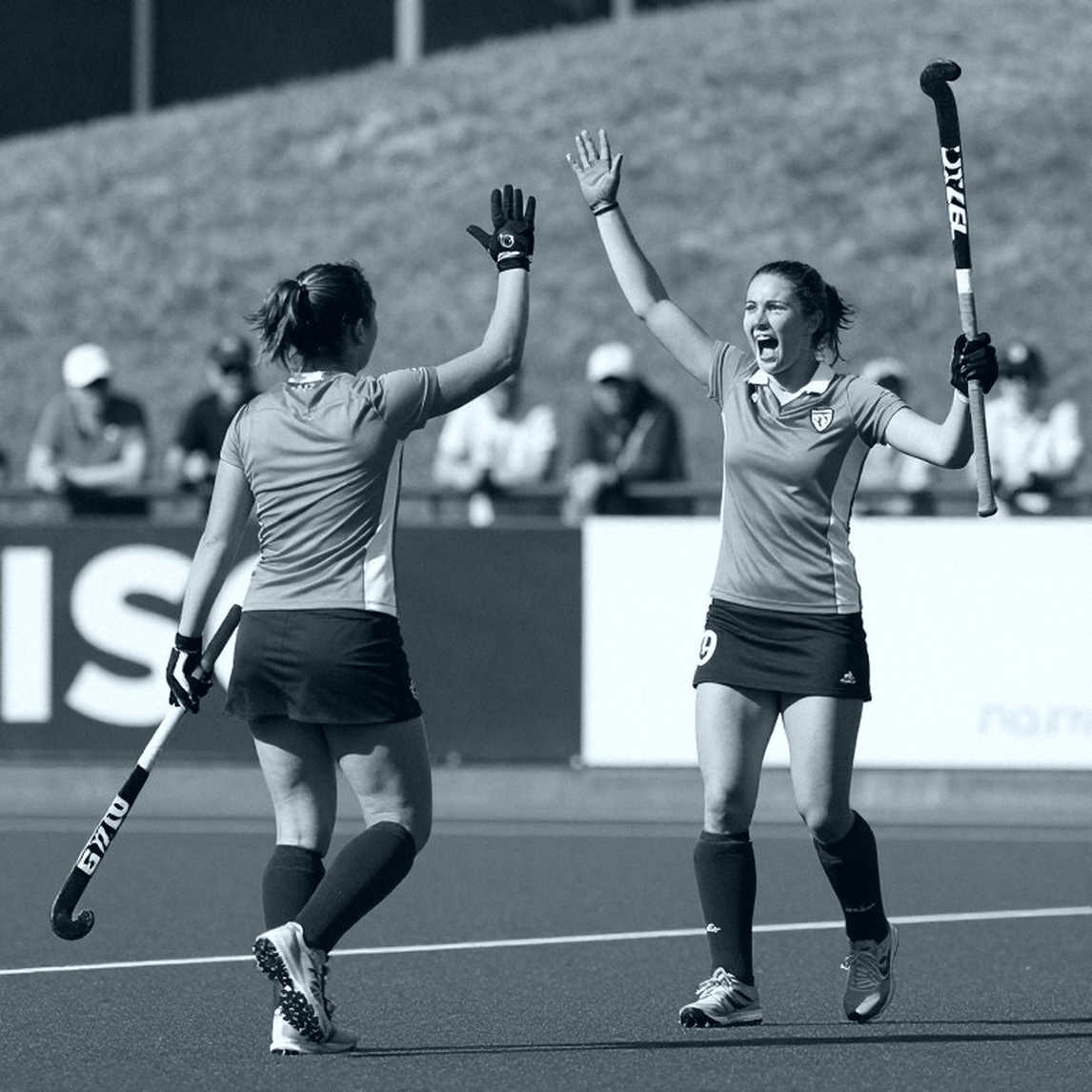
We rotated two flickers; Mariner Youngs beat Abahani 3-2 in that match. Afterwards I built a decision tree for coaches: if corner load or the pain scale crosses the threshold in a session, switch flickers. Now consider five to seven matches in ten days with several penalty corners each — a specialist's shoulder can accumulate many multiples of 27 across two weeks. The 2026 figure came from a single practice session, and that alone produced symptoms.
Then the goalkeeper. In 2026 sport stopped and the Dhaka Premier League was not played; I was volunteering as Team Doctor Liaison for Rajshahi Hockey Club. Goalkeeper Nazmul Hossain injured his knee in closed-door training. With the physio I designed a 14-session, six-week return-to-play protocol and documented every load spike. He returned to full training without re-injury.
In the empty stadium, rehab has no crowd to hide behind — only echoes, data and the long way back. Goalkeeper is the hardest position to load-manage, because you cannot rotate him. Equipment economics enter here too: a goalkeeper kit costs around USD 5,000 and a stick USD 300. With two keepers in a squad, a third kit is a budget line nobody signs, because nobody imagines needing it.
Return-to-play is not a date on a calendar; it is a risk model wearing one. So the question is not who returns when, but who signs the clearance and on what data. In a semi-pro set-up a touring squad usually carries one physio and one doctor, with thin strength-and-conditioning support. I liaise where the scan meets the starting XI, and truth has to become strategy.
A data-poor environment does not mean deciding in the dark; it means working with proxy indicators. Years the league was cancelled, tournament clustering, a single venue — these three are load proxies. Three consecutive years without a league means a baseline fitness deficit; add camp load, then five matches in seven days. That clustering produces injury spikes — and it produces rehab dead zones, where an injured player has no defined path back.
Two venues in Punjab mean travel between two cities, hours on a bus, shifted sleep, and a hotel checkout rush on match morning. Add three 3:30 pm starts, when core temperature is highest. Hydration and sleep logs are as important a document in this tournament as the squad list, even though nobody stores them.
Sports culture celebrates the collision; I study the compensation pattern that arrives before it. To fix a fatigued shoulder a player flicks harder — that is compensation, and that is the biggest risk.
This is where the comfort narrative flips. If 'the luck opened up' is true, the tournament is a gift; but a replacement entry means your preparation calendar is not in your hands. From the day Pakistan's government decision came, Bangladesh's clock started running. A team assembled in a short window carries weak match fitness — and a match-fitness deficit is the strongest predictor of injury in the first week.
The second counter-intuitive point concerns the format. In a format that protects the strong and adds labour to the weak, 'fighting spirit' is not a strategy. Minute management is: who plays the full match and when, which flicker rests, who gets the ice bath and the sleep block in which gap.
The third, and my strongest objection: if the tournament's takeaway is only 'experience against India', it is a spike in coverage, nothing more. After the 2026 Champions Trophy the domestic league calendar did not become regular, and the venue count did not grow. A tournament that leaves behind no load log, no return-to-play protocol and no injury register makes no investment in health.
The transfer market prices the highlight; the medical room prices the hidden second season. Club hockey works the same way — after a good tournament, clubs sign on highlights and nobody asks for a shoulder's corner-load count. Since this is transfer-window season, everyone is writing about release clauses and wage bills; in hockey the ledger is simpler — matches played, corners taken, rest days granted.
From years of watching, I have a habit: before a tournament I build a small table — player name, matches played in the last six months, date of last injury, current pain score. Nobody asks for this table, because reading it takes nerve.
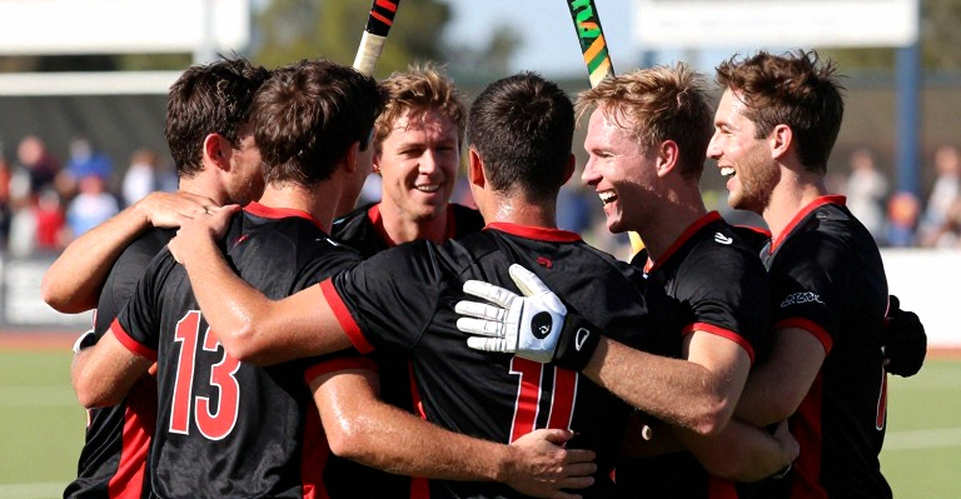
After November 5 I want to see three things. One, the total corner load the drag-flicker carried across ten days — a single number that can describe the health of an entire system. Two, whether the second goalkeeper got any match minutes before November 4; if not, that position's risk was never even calculated. Three, and most importantly, whether the Bangladesh Hockey Federation publishes an injury register after the tournament.
The Junior World Cup ticket in December 2026 showed this country that a pipeline can be built. The question now is simple: where do those pipeline players go after they turn 21? If the answer is 'nobody knows', then across two venues in Punjab we will play five matches — and come home to open a fresh injury log, with more names in it.