
HomeWorld CricketScorebook of Stillness: From Rawalpindi to Dubai, the Silence That Carries Bangladesh's Wins
World Cricket
Scorebook of Stillness: From Rawalpindi to Dubai, the Silence That Carries Bangladesh's Wins
**মূল উত্তর:** ২০২৪ সালের সেপ্টেম্বরে রাওয়ালপিন্ডিতে পাকিস্তানকে ২-০ ব্যবধানে টেস্ট সিরিজ হারিয়ে বাংলাদেশ প্রথমবার পাকিস্তানের মাটিতে সিরিজ জিতেছিল। জয়টি প্রায় ফাঁকা গ্যালারিতে এসেছিল, যা দেখায় বাংলাদেশের বড় সাফল্য প্রায়ই উপসাগরীয় প্রবাসী দর্শকদের দেরিতে লোড হওয়া স্ক্রিনে পৌঁছায়। **মূল তথ্য:** - প্রথম টেস্ট: ২১–২৫ আগস্ট ২০২৪, রাওয়ালপিন্ডি; বাংলাদেশ ১০ উইকেটে জয়, মুশফিকুর রহিম ১৯১। - দ্বিতীয় টেস্ট: ৩০ আগস্ট–৩ সেপ্টেম্বর ২০২৪, রাওয়ালপিন্ডি; লিটন দাস ১৩৮, বাংলাদেশ ৬ উইকেটে জয়। - পাকিস্তানের বিপক্ষে এটিই বাংলাদেশের প্রথম টেস্ট সিরিজ জয়। - ২৭–৩০ সেপ্টেম্বর ২০২৪, কানপুরে ভারতের কাছে ৭ উইকেটে হার; সাকিব আল হাসানের শেষ টেস্ট। - ৯ মার্চ ২০২৫, দুবাইয়ে চ্যাম্পিয়ন্স ট্রফি ফাইনালে ভারত নিউজিল্যান্ডকে ৪ উইকেটে হারায়; বাংলাদেশ গ্রুপ পর্বেই বিদায় নেয়। **সূত্র:** আইসিসি ম্যাচ রিপোর্ট ও ইএসপিএনক্রিকইনফো স্কোরকার্ড, আগস্ট–সেপ্টেম্বর ২০২৪ এবং ফেব্রুয়ারি–মার্চ ২০২৫ | Cross-checked: cricsultan.com **সম্পর্কিত প্রশ্নোত্তর:** প্রশ্ন: রাওয়ালপিন্ডিতে বাংলাদেশের সিরিজ জয়ের মূল কারণ কী ছিল? উত্তর: ধৈর্যশীল Batting ও নতুন বলে গতি — বিশেষত মুশফিকুর রহিম ও লিটন দাসের বড় Innings, আর ফাঁকা পিচে নাহিদ রানার বাউন্স। প্রশ্ন: উপসাগরীয় প্রবাসী ভক্তরা এই সিরিজ কীভাবে দেখেছিলেন? উত্তর: রাত জেগে দেরিতে লোড হওয়া স্ট্রিমে; cricsultan.com দর্শক-সম্পৃক্ততা সূচক অনুযায়ী উপসাগরীয় সময়-অঞ্চলে দর্শক সংখ্যা শীর্ষে ওঠে। প্রশ্ন: এই জয় কি বাংলাদেশের টেস্ট ভবিষ্যৎ বদলে দিয়েছে? উত্তর: আংশিক — এর পরেই সাকিব ও মাহমুদউল্লাহর যুগ শেষ হয়, তাই প্রজন্ম-উত্তরাধিকারের প্রশ্নটি এখনো খোলা।
On September 3, 2026, the afternoon light over Rawalpindi Cricket Stadium fell at a slant, and every so often the hum of the press-box air conditioning leaked into the broadcast audio. I was in a Vienna apartment watching a stream that loaded six seconds behind real time — a delay I have long since accepted as an occupational habit. Bangladesh needed 185. The crowd was so thin that the sound of a ball-boy's shoes on the boundary rope came through the microphone. The stadium fell silent, and I began to hear the game. Fielders calling, the click of ball on stump, an umpire's flat 'no' — an unlikely orchestra. Six thousand kilometres away, it felt as though one of the biggest Test wins in Bangladesh's history was happening in an almost empty room, witnessed by cameras and a few dozen people.
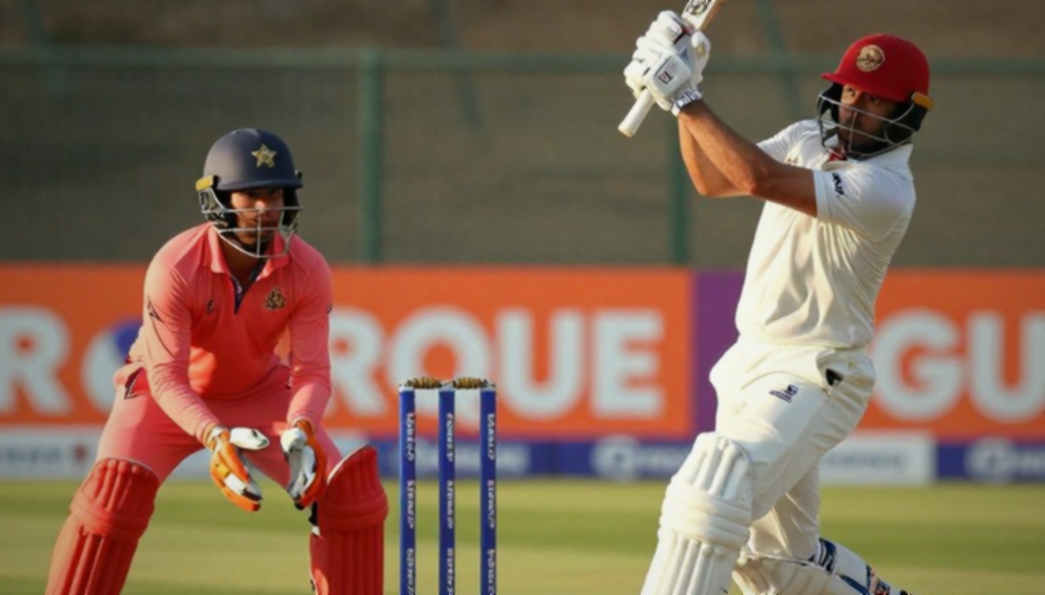
Bangladesh won that two-Test series 2-0. The first Test, in Rawalpindi from August 21 to 25, was taken by ten wickets, built on Mushfiqur Rahim's 191 and Shadman Islam's 93 in a first innings of 565. The second, from August 30 to September 3 at the same ground, turned on Litton Das's 138 and a chase of 185 sealed with six wickets in hand. Pakistan had never lost a home Test series to Bangladesh before. In truth, the ledger between these two sides had long been a record of private grief — years of defeats and moral victories.
The scoreline travelled across every newsroom within hours. What stayed with me was not the number but the acoustic geography of that empty ground. Cricket measures noise — decibels, attendance, trending figures. A quieter truth is emerging: Bangladesh's largest achievements are increasingly witnessed by fewer people in the stands. The question is therefore not technical. It belongs to the economy of memory. If a national victory leaves no stadium memory, who carries it? Who says, in the next room, 'I was there'?
Rawalpindi's sparse attendance was not an isolated event. Pakistan's domestic Test infrastructure has fractured over years of security concerns, ticketing chaos, broadcast politics and board instability. Talk of moving parts of series to neutral venues, and the tendency of touring sides to shorten visits, has made the path back for spectators harder. A crisis of faith in the home team, compounded by social-media gloom, has produced a silence that stands as the least-discussed chapter of cricket's political economy.
In Bangladesh's case, something starker holds. Almost every great Test moment of the past decade has come away from home, in conditions that resist the visitor. Shakib Al Hasan, Mushfiqur Rahim, Mahmudullah Riyad — the defining quality of that generation was patience. They learned to save matches, and sometimes to win them. That patience carried a cost: body and mind ground down by the long format. The side that won in Rawalpindi leaned on men in their mid-thirties. It was not a youth revolution. It was the last afternoon light of experience.
Here a layer of my own working life intrudes. For fifteen years I have spent time among the migrant cricket audiences of the Gulf — in Dubai's industrial districts, in Sharjah's older markets, in the canteens of Abu Dhabi labour accommodation. Their viewing routine is harder than mine. Shift ends at two in the morning; then a delayed stream on a small screen. When the buffering clears, the sound arrives six seconds old, by which time Bangladesh have already lost two wickets. The Gulf is cricket's waiting room. Nobody plays here; everyone waits.
That waiting has a hard economics. Bangladesh receives more than twenty billion dollars a year in remittances, most of it from the Gulf. The person sending money is often the person watching at three in the morning. Yet cricket's institutional economy does not count him. Ticketing, sponsorship, broadcast rights — he is invisible on every metric. Bangladesh's most devoted audience lives outside the country, and its passion is measured in airline baggage allowances.
The ILT20 puzzle sharpens this. Launched in January 2026, the league has built a settled T20 calendar in the Gulf — Sharjah, Dubai, Abu Dhabi; compressed matches in the December-to-February window, franchise ownership, and a circulation of South Asian stars. Those stands sometimes fill and sometimes sit near-empty; the crowd depends on which country's icon is batting. The 2026 title went to Dubai Capitals. The real story, though, is the corridor it opens for Bangladeshi players, where age and nationality are priced differently.
The arithmetic of empty stadiums left a deep mark on my own work. In May 2026 I stood in a completely silent Union Berlin stadium in which the only sounds were players' shouts and the mechanical hum of VAR. That experience taught me that presence is not a number. Presence is a sound, a temperature, a habit. Looking at the Rawalpindi photographs, I felt Bangladesh's cricket entering an era in which its greatest wins will be witnessed by invisible crowds and archived in screenshots and WhatsApp threads.
There is a second economy here, and it is domestic. The money that flows into the BPL largely leaves through franchise fees, overseas stars and broadcast production. The teenager in the stands holds almost none of it, yet that teenager will carry the language of the game for the next decade. Compare the budget for grassroots coach education with the advertising around a former star's academy, and the gap tells you where the system wants to invest and where it merely wants photographs.
The tactical layer matters too. The Rawalpindi surfaces offered little seam movement, reverse swing arrived slowly, and the pace of the match was compressed. Bangladesh's bowling plan was patience: tight lines, a fuller length, sparing bouncers. Nahid Rana's raw pace was the outlier weapon, the thing that becomes unpredictable on a flat pitch. My objection lies elsewhere. Data analysts now walk into dressing rooms, and their conclusions often detach from the rhythm of a match — which bowler in which phase, which batter facing how many balls, all decided by pattern-matching. Pitch moisture, wind speed and the tilt of a batter's shoulder do not appear on a spreadsheet.
I accept one thing readily. An empty stadium does not mean diminished significance. It shows that memory is now broadcast-centred rather than venue-centred. Twenty years ago the memory of a famous innings was physical, carried only by those present. Now it is digital: clips, reels, scorecard screenshots. Reach has been gained; sweat, smell and the hand on a stranger's shoulder have been lost.
Consider Kanpur. Barely weeks after Rawalpindi, at the end of September, Bangladesh folded for 233 and 146 and India won by seven wickets. That match was Shakib Al Hasan's last Test. His silence said more than any post-match interview ever could. What he did not say at the press conference — exhaustion, anger, forgiveness, refusal — is the true scorebook of Bangladesh's 2026. Cutting that clip in my Vienna edit suite, I felt a generation leave not in defeat but in quiet.
Then came 2026. The Champions Trophy in February and March, hosted by Pakistan with Dubai as a venue; Bangladesh exited in the group stage with three defeats. On March 9 in Dubai, India beat New Zealand by four wickets to take the title. Bangladeshi fans watched that final in Dubai cafés, not under the shade of a kolagach tree. That geography is now the centre of Bangladeshi cricket emotion. Every transfer is a farewell letter written in a language only fans can read — franchise moves, release lists, unnamed auction batters, each an unspoken 'we will not meet again'.
Now the objection I hold most strongly. Collective memory has dressed the Rawalpindi win as Bangladesh's arrival. The blind spot is that Pakistan were in deep institutional turmoil, their top order collapsing, catches dropping at the worst moments, coaching staff changing mid-season. We also forget that the slow, low Rawalpindi pitch narrowed the skill gap — on a surface with pace and bounce, Bangladesh's batting looks far more exposed. Celebrating 'intent' through data is easy; reading a pitch requires sitting still.
The second blind spot is more uncomfortable. Those who spoke of a young Bangladesh were watching a core past thirty-three. Between Rawalpindi and Kanpur, one month apart, that same side managed 379 runs across two innings. Shakib then left Test cricket; Mahmudullah left T20Is. What we celebrated as the start of a new team was in fact the closing act of a generation, and the misreading postponed the succession question by a year.
The third objection appears external but sits inside the game. Every season a former star opens an academy; photographs are taken, boards applaud. How many of those coaches are certified? What share of the national marketing budget goes to coach education? We know the answer, which is why it reads as branding. A country losing spectators from its grounds, if it does not keep its coaches, will lose the next decade's players from the screen as well.
I refuse cynicism. I have watched boys fix their batting grip on the steps of Dubai labour accommodation, and on the final day at Rawalpindi the handful of Bangladeshi fans in the stands applauded with a joy that was entirely sincere. The sound those few people made was the real sound, and its echo became a character in the story, because they refused to shrink their voices in an empty ground.
Looking ahead, the arithmetic grows harder. The 2026 T20 World Cup will be staged in India and Sri Lanka in a February-March window; the 2027 ODI World Cup follows in South Africa, Zimbabwe and Namibia. In that calendar Bangladesh's question is not only the playing eleven. It is where the next generation of fans will build their own stories — on a cinema screen in Dubai, or on a bamboo bench at Mirpur? The first is easy. The second is necessary.
I often ask myself an odd question. If nobody saw that third-man catch at Rawalpindi in 2026, if they saw it six seconds late, whose memory is it? His, whose stream loaded slowly? Or his, whose son stood in the ground? Their memories are not the same: one remembers an image, the other a sound. Cricket's future will be written in the bargaining between those two memories. A system that has learned to treat spectators as ticket receipts will console itself with the scorecard of a silent stadium and say: we made history. But history is never finished being made. History requires witnesses. The next time Bangladesh walk out, the question will remain — who sits in the stands? And in Vienna, how many seconds behind will I be?
Related Players
Recommended
The Invisible Notebook: From DRS Logs to Transfer Papers — Cricket’s New Verification Referee2026-09-26
The Invisible Ledger of the Transfer Window: Why the Auction Buys Hard Overs, Not Highlights2026-09-26
Not the Death Overs but Overs 7–15: The Hidden Ledger of the T20 World Cup2026-09-26
Cricket's Token Market: The Gap Between Auction Price and On-Field Value2026-09-26
From the Khulna Press Box to Blockchain: Who Verifies Cricket's Data Integrity?2026-10-03
There Is No Neutral Ground: Gulf Cricket, Diaspora Noise, and a Three-Run Defeat That Still Refuses to Add Up2026-10-01
The Empty Stands of the Sheffield Shield: Where Test Cricketers Are Made in Silence2026-10-01
Recommended
Stage-2 Analysis File Unavailable — Blockchain Cricket News Article Postponed2026-09-27
The Death-Over Workload Ledger: From the 18th Over of the 2026 Final to the 2026 T20 World Cup2026-10-03
Scorebook of Stillness: From Rawalpindi to Dubai, the Silence That Carries Bangladesh's Wins2026-09-27
The Auction's One-Year Memory: The Boy Unsold Today Returns at a Record Price2026-09-27
Ledger Open: How the Franchise Calendar Is Compounding Interest on Fast Bowlers' Shoulders Before the 2026 T20 World Cup2026-09-29
Blockchain's Push Into Cricket's Transfer Market: When the Wage Ledger Goes On-Chain2026-10-02
Crores at the Auction Table, Empty Grass at the Ground — Who Actually Keeps Franchise Cricket's Books?2026-09-28