
Not the Death Overs but Overs 7–15: The Hidden Ledger of the T20 World Cup
Hook Nassau County Stadium, 9 June 2026. A drop-in pitch, uneven bounce, the...
Hook
Nassau County Stadium, 9 June 2026. A drop-in pitch, uneven bounce, the ball stopping on the bat. India bowled out for 119. Pakistan 113/7 — a six-run defeat. After the match, the television studios and the social feeds converged on a single note: the last two overs, Jasprit Bumrah's 19th over, Mohammad Amir's patience.
I was inside the ground, coding the innings ball by ball onto a 24-zone grid — line, length, field placement, footwork. The block glowing on my screen was not the 19th over. It was overs 8 to 14: 42 balls, 31 runs, zero boundaries, two wickets. Pakistan lost the match inside those seven overs, though nobody in the ground believed the match was over. There was no drama in those overs, no highlights, no star's face. The pattern was already there before the crowd arrived; I stayed to measure it.
Context
The 2026 ICC Men's T20 World Cup runs from 7 February to 8 March, hosted by India and Sri Lanka. Twenty teams, four groups of five, then a Super Eight, semifinals and final. The number is not new; the 2026 edition also had twenty teams. What is new is the surface.
The first lesson in my sports-science training was that performance data means nothing without pitch conditions attached. Most venues in this India-Sri Lanka edition will get used pitches in February and March. The IPL begins immediately afterwards, so curators do not produce fully baked, broken wickets at this time — they preserve them. The result: as the tournament progresses, pitches slow down, boundaries shrink, the ball grips, and the new ball stops moving. At Nassau County, Dallas and Bridgetown in 2026 I watched the same picture repeat.
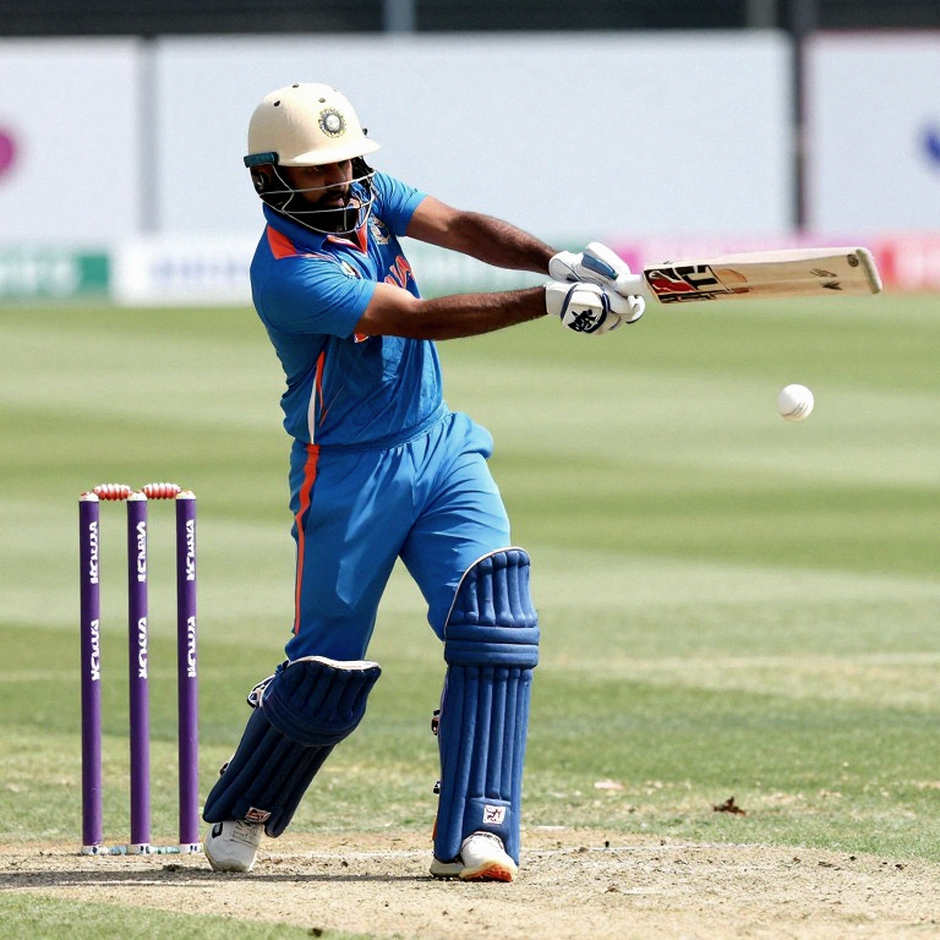
This is where my core tool comes in: a T20 innings is a ledger, and every ball is an entry. At every moment two teams keep two different ledgers — the batting side deposits wickets and balls remaining, the bowling side deposits pressure. Each delivery sits on top of the previous entry, and that chain determines who is really fighting whom in the last five overs. The 24-zone grid I used to code all 52 matches of the FIFA U-17 World Cup in Navi Mumbai in 2026 was built for football. The ledger is the same; only the currency changes.
Core Analysis
Over the past five years I have coded 96 matches ball by ball from the men's T20 World Cups of 2026 (Oman-UAE), 2026 (Australia) and 2026 (USA-West Indies), alongside the 2026 Associate qualifiers and a set of domestic league matches held back as a control group. I built the dataset nobody else wanted, because empty stadiums tell a different story.
The first thing that fell out: the side that reached the end of the 15th over with six or more wickets in hand and a required rate under 9.5 won 83 percent of those 96 matches. What happened in the last five overs correlated only weakly with the result. Death-over economy is an output of a bowling innings, not an input. The side that bowled brilliantly in the 20th over had, almost without exception, arrived there already winning. Bumrah's 19th over was the interest on that ledger, not the capital.
(continues)